Introduction
The cell membrane plays a crucial role in maintaining the internal environment of a cell. It acts as a selective barrier that controls the movement of substances, ensuring proper cellular function.
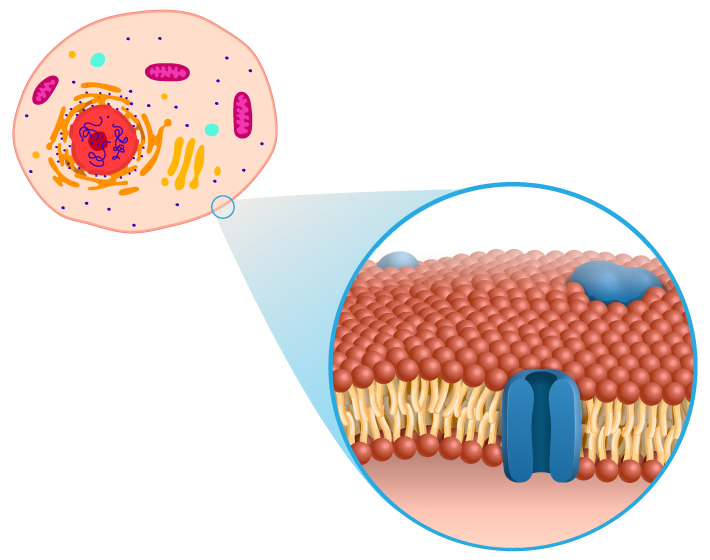
Structure of the Cell Membrane
The membrane is composed of a phospholipid bilayer embedded with proteins. This structure allows flexibility and selective permeability.
Functions of the Membrane
- Protects the cell
- Regulates substance exchange
- Maintains internal balance
Types of Transport
Passive Transport
Does not require energy:
- Diffusion
- Osmosis
- Facilitated diffusion
Active Transport
Requires energy to move substances against a gradient.
Endocytosis and Exocytosis
Cells can also transport materials using vesicles:
- Endocytosis (intake)
- Exocytosis (release)
Modern Understanding
Recent studies highlight the dynamic nature of membranes, showing how they adapt and respond to environmental changes.
Importance
Efficient transport ensures nutrient uptake and waste removal, which are essential for cell survival.
Conclusion
The cell membrane is a highly dynamic structure that plays a central role in maintaining cellular balance.