Introduction
Cell biology is the foundation of all life sciences, focusing on the structure and function of cells—the smallest units capable of sustaining life. Modern cell biology combines traditional knowledge with advanced imaging and molecular techniques to provide deeper insights into how cells operate, communicate, and adapt.
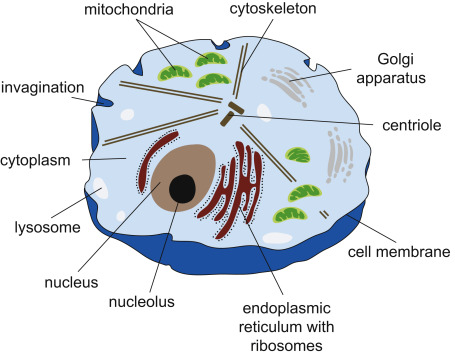
The Cell: Basic Unit of Life
Every living organism is made up of one or more cells. Cells carry out essential processes such as metabolism, growth, and reproduction. Despite their microscopic size, cells are highly organized and efficient systems.
Types of Cells
Cells are broadly divided into two categories:
1. Prokaryotic Cells
Simple cells without a defined nucleus. Their genetic material is freely located within the cell.
2. Eukaryotic Cells
More complex cells with a nucleus and specialized organelles. These cells make up plants, animals, and humans.
Key Organelles and Their Functions
Nucleus
The nucleus contains genetic material and acts as the control center of the cell.
Mitochondria
Responsible for producing energy, mitochondria convert nutrients into ATP, the energy currency of the cell.
Endoplasmic Reticulum (ER)
Involved in protein and lipid synthesis.
Golgi Apparatus
Modifies and packages proteins for transport.
Ribosomes
Sites of protein synthesis.
Cell Membrane
A protective barrier that regulates what enters and exits the cell.
Modern Insights into Cell Function
Advancements in microscopy have allowed scientists to observe cellular processes in real time. This has enhanced our understanding of how cells communicate and respond to their environment.
Cell Communication
Cells communicate through chemical signals, ensuring coordination within tissues and organs. This communication is essential for maintaining balance.
Importance of Cell Biology
Cell biology helps explain how organisms grow, develop, and function. It is essential for understanding life processes at a fundamental level.
Conclusion
Cells are complex and dynamic units that form the basis of life. Modern research continues to reveal new insights into their structure and function.